


Article: Glycerin for Skin: The Best Ingredient Nobody Talks About
Glycerin for Skin: The Best Ingredient Nobody Talks About
🛍 Shop the Collagen Night Wrapping Mask →

Glycerin is a humectant, it draws water into the outer layers of your skin and holds it there, leaving skin softer and more comfortable. It's one of the most studied ingredients in cosmetic science, it suits almost every skin type, and it costs a fraction of the trendier alternatives. It simply has no marketing behind it.
Glycerin is on the ingredient list of an enormous proportion of the skincare in your bathroom. It's rarely on the front of the bottle.
That's not because it doesn't work. It's because it's cheap, unglamorous, and impossible to build a launch campaign around. Nobody is going viral over glycerin.
Which is a shame, because for a lot of people it's the most useful hydrating ingredient available, and if a $60 serum is outperforming a $12 one, glycerin is quite often the reason why.
What Glycerin Is
Glycerin (also written glycerol) is a clear, odourless, syrupy liquid. It occurs naturally in plant and animal fats, and most cosmetic glycerin is plant-derived, typically from vegetable oils.
It's also naturally present in your own skin. Your skin uses glycerin as part of its own moisture-retention system, which is part of why applying it is so well tolerated, it isn't a foreign material your skin has to adjust to.
How It Works
Glycerin is a humectant, meaning it attracts water molecules and holds onto them. Applied to skin, it binds water in the outer layers, and skin holding water looks smoother and feels more comfortable.
It draws that water from two places: the air around you, and the deeper layers of your own skin. That second source is why technique matters. In dry conditions, with nothing available from the air, a humectant leans harder on your own skin's moisture, which is why you seal it with a moisturiser rather than leaving it bare.
Same principle as hyaluronic acid, and we cover it in detail in our guide to what hyaluronic acid actually does. Glycerin behaves the same way, and deserves the same handling.
Glycerin Versus Hyaluronic Acid
The comparison people actually want, since both are humectants and only one gets the marketing.
| Glycerin | Hyaluronic acid | |
|---|---|---|
| Job | Humectant | Humectant |
| Research base | Extensive, decades long | Extensive |
| Feel | Can feel tacky at high levels | Lighter, more elegant |
| Cost | Very low | Considerably higher |
| Marketing appeal | None whatsoever | Substantial |
The honest summary: both work, and the main practical difference is texture and price. Many good formulas use both, because hyaluronic acid gives a lighter feel while glycerin does dependable work underneath. A product isn't worse for leading with glycerin, often the opposite.

Why It Suits Almost Everyone
- Very low irritation risk — among the best-tolerated ingredients in cosmetics, which is why it turns up in products for sensitive and compromised skin
- Non-comedogenic — suitable for oily and acne-prone skin at normal concentrations
- No tolerance period — it isn't an active, so there's nothing to build up to
- No conflicts — it layers with anything, because it isn't competing for the same mechanism
- Suits every skin type — dry skin needs the hydration, oily skin gets it without heaviness
What Glycerin Won't Do
- It won't treat any skin condition. It's a cosmetic hydrating ingredient
- It won't change your skin's structure. Nothing about collagen, elasticity or texture at a biological level
- It won't work alone. A humectant needs sealing. Without something on top, that water evaporates
- It won't permanently fix dry skin. Stop using it and hydration returns to whatever your routine sustains
How to Use It Well
- Apply to damp skin. Within a minute of cleansing, while your face is still slightly wet, this gives the humectant water to bind immediately
- Seal it. Follow with a moisturiser, or an overnight treatment in the evening. This step is the one people skip, and it's the one that makes it work
- Don't chase high concentrations. Glycerin at very high levels feels tacky. In a well-built formula it sits at a modest percentage, which is exactly right
- Look for where it sits on the list. Top five means it's present in quantity. Below the preservative means trace amounts
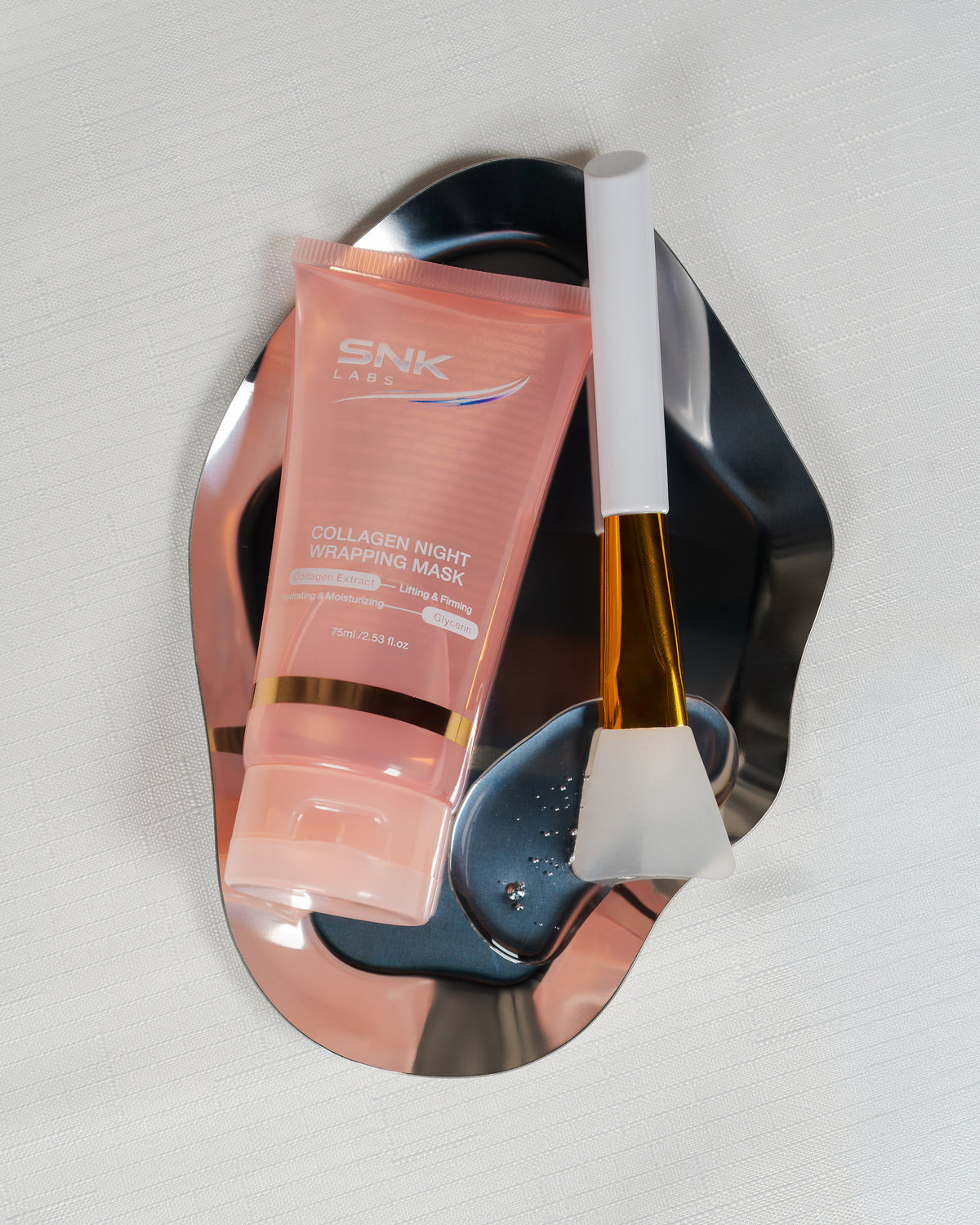
In our own Collagen Night Wrapping Mask, glycerin works alongside trehalose to draw moisture in, while the overnight film slows it escaping. Humectant and occlusive, doing the two halves of one job.
Frequently Asked Questions
Is glycerin good for your face?
Yes, for most people. It's one of the best-studied and best-tolerated hydrating ingredients available, it suits every skin type, and it carries very little irritation risk. Its main limitation is that it needs a moisturiser over the top to hold the hydration in.
Is glycerin better than hyaluronic acid?
Neither is better, they do the same job. Hyaluronic acid feels lighter and more elegant on the skin; glycerin is cheaper and just as well supported by research. Plenty of good formulas use both. Price difference reflects marketing more than performance.
Can glycerin dry out your skin?
In very dry conditions, applied to dry skin with nothing sealing it, a humectant can draw water from deeper in your skin and lose it to the air. Apply to damp skin and follow with a moisturiser and this doesn't happen. It's a technique issue, not an ingredient flaw.
Is glycerin safe for sensitive or acne-prone skin?
Generally yes on both counts. It's non-comedogenic at normal concentrations and has one of the lowest irritation profiles of any cosmetic ingredient, which is why it appears so often in products for compromised skin. Patch test anything new regardless.
Should I use pure glycerin on my skin?
We'd not recommend it. Undiluted glycerin is thick, sticky and can draw moisture out of the skin in dry conditions. It works best formulated at a sensible concentration alongside other ingredients, which is how you'll find it in almost every moisturiser you own.
The Takeaway
Glycerin is the most useful skincare ingredient nobody talks about. Decades of research, excellent tolerability, suits every skin type, and costs almost nothing, which is precisely why no brand builds a campaign around it.
If a product is working well for your dry skin, check the list. Glycerin is very often the reason, and you're probably crediting something else.
Our Collagen Night Wrapping Mask uses glycerin and trehalose under an overnight film. For how to read any ingredient list properly, see our plain-English ingredients guide, or browse our skincare range.
Unglamorous. Well studied. Works.
Individual results may vary. This product is intended for cosmetic use only.