

Turmeric for Hair: What It Actually Does for Your Scalp
🛍 Shop the SNK Labs Hair Growth Elixir →

Turmeric is used in haircare as an antioxidant botanical that helps the scalp feel comfortable and calm. It has a long history in traditional scalp care across South Asia, and it appears in modern formulations as a supporting extract rather than a hero active. It won't grow hair, and in cosmetic amounts it won't stain it either.
Turmeric is having an unexpected second life. After years as a wellness-aisle staple, it's turning up on ingredient lists in haircare — part of a broader shift back toward heritage botanicals with a long record of traditional use.
It's in our own Hair Growth Elixir, sitting in the middle of the blend. Here's what it's actually doing there, what it isn't, and why the fear of orange hair is mostly misplaced.
What Turmeric Is
Turmeric comes from the root of Curcuma longa, a plant in the ginger family. Its most-discussed compound is curcumin, which gives the root its colour and carries most of its antioxidant activity.
In cooking, turmeric is used as a whole ground spice. In cosmetics, it's typically a standardised extract — a controlled preparation at a known concentration, blended into a carrier. That distinction matters for the staining question, and we'll come back to it.
In traditional South Asian hair care, turmeric has been used in scalp oils and hair masks for centuries, usually alongside other botanicals rather than alone. Modern formulations follow much the same logic.
What Turmeric Does in a Hair Oil
Three things, all of them supporting rather than starring.
- Antioxidant support — curcumin is a well-studied antioxidant, and antioxidants in an oil blend help protect the formula itself as well as contributing on the scalp
- Helps the scalp feel calm — the property it's most consistently associated with in cosmetic use, and the reason it suits a leave-in scalp treatment
- Complements the rest of the blend — in our formula it sits alongside ginger root and rosemary, which is a fairly traditional grouping
Notice what's absent. Turmeric isn't a growth ingredient, and any product positioning it that way is reaching well past the evidence. It's a supporting botanical in a blend, and that's a perfectly respectable thing to be.
Will It Stain My Hair or Scalp?
The question everyone actually wants answered.
In a properly formulated cosmetic oil, no. The concentration used in a blend is a fraction of a percent — nothing like the quantity in a kitchen-made turmeric paste, which absolutely will stain skin, towels and light hair.
That's the real distinction: a homemade turmeric hair mask made with ground spice is a genuine staining risk. A standardised extract at cosmetic concentration, diluted through a carrier oil, is not.
Two sensible precautions regardless. If your hair is very light, blonde or grey, patch test on a hidden section first. And wash the oil out properly rather than leaving it in — which is good practice for any scalp oil.

Turmeric Versus the Kitchen Version
| Ground spice at home | Cosmetic extract in a blend | |
|---|---|---|
| Concentration | Uncontrolled — whatever you spoon in | Standardised, a fraction of a percent |
| Staining risk | High — skin, towels, light hair | Minimal at cosmetic levels |
| Washing out | Gritty, often takes several washes | Washes out with the oil |
| Stability | Degrades quickly, no preservation | Formulated for shelf life |
What Turmeric Won't Do
Direct, as always.
- It won't regrow hair or reverse hair loss. No botanical does. Those outcomes sit with genetics, hormones and medical conditions
- It won't treat dandruff, psoriasis or any scalp condition. Persistent flaking, itching or soreness needs a GP or dermatologist
- It won't lighten or change your hair colour — despite what some corners of the internet suggest
- It won't do much on its own. It's a supporting extract, and the carrier oils are doing most of the conditioning work
How to Use a Turmeric-Containing Hair Oil
The same way you'd use any scalp oil — the turmeric doesn't change the method.
- Apply to dry hair, on the scalp. Part in sections and work along each parting, five to eight drops for shorter hair and ten to fifteen for longer
- Massage for two to three minutes with fingertips, not nails
- Leave it overnight, or at minimum thirty minutes
- Shampoo before adding water — apply shampoo straight onto the oiled hair, then rinse
- Once or twice a week is plenty
Our at-home head spa guide sets out the full routine, and the Australian guide to hair growth oils covers what to realistically expect from one.
Frequently Asked Questions
Will turmeric stain my hair?
Not at the concentrations used in a formulated cosmetic oil, where it sits at a fraction of a percent diluted through carrier oils. Homemade turmeric pastes made with ground spice are a different matter and genuinely can stain. If your hair is blonde, grey or very light, patch test a hidden section first.
Does turmeric help hair grow?
No. It's an antioxidant botanical that helps the scalp feel comfortable, and it works as a supporting ingredient in a blend. Growth rate is governed by genetics and biology, and no topical botanical changes it. Be wary of any product suggesting otherwise.
Can I make my own turmeric hair mask instead?
You can, but you'll get uncontrolled concentration, a real staining risk, a gritty texture that's hard to rinse, and no shelf stability. A formulated oil solves all four. If you do try it, use a small amount and expect to wash more than once.
Is turmeric safe for a sensitive scalp?
At cosmetic concentrations it's generally well tolerated, and it's often chosen for calming formulations. As with any new product, patch test behind the ear first and discontinue if you notice irritation. Persistent scalp problems should be seen by a healthcare professional.
Does turmeric help with dandruff?
It isn't a treatment for dandruff or any scalp condition, and we wouldn't suggest using it as one. A comfortable, well-conditioned scalp is a reasonable goal for a cosmetic oil. If you have persistent flaking or itching, that's worth seeing a GP or dermatologist about.
The Takeaway
Turmeric is a sensible supporting ingredient with a long traditional record and genuine antioxidant credentials. It isn't a growth ingredient, it isn't a treatment, and it's most useful as one part of a well-balanced blend.
It also isn't going to turn your hair orange — that's a kitchen problem, not a cosmetic one.
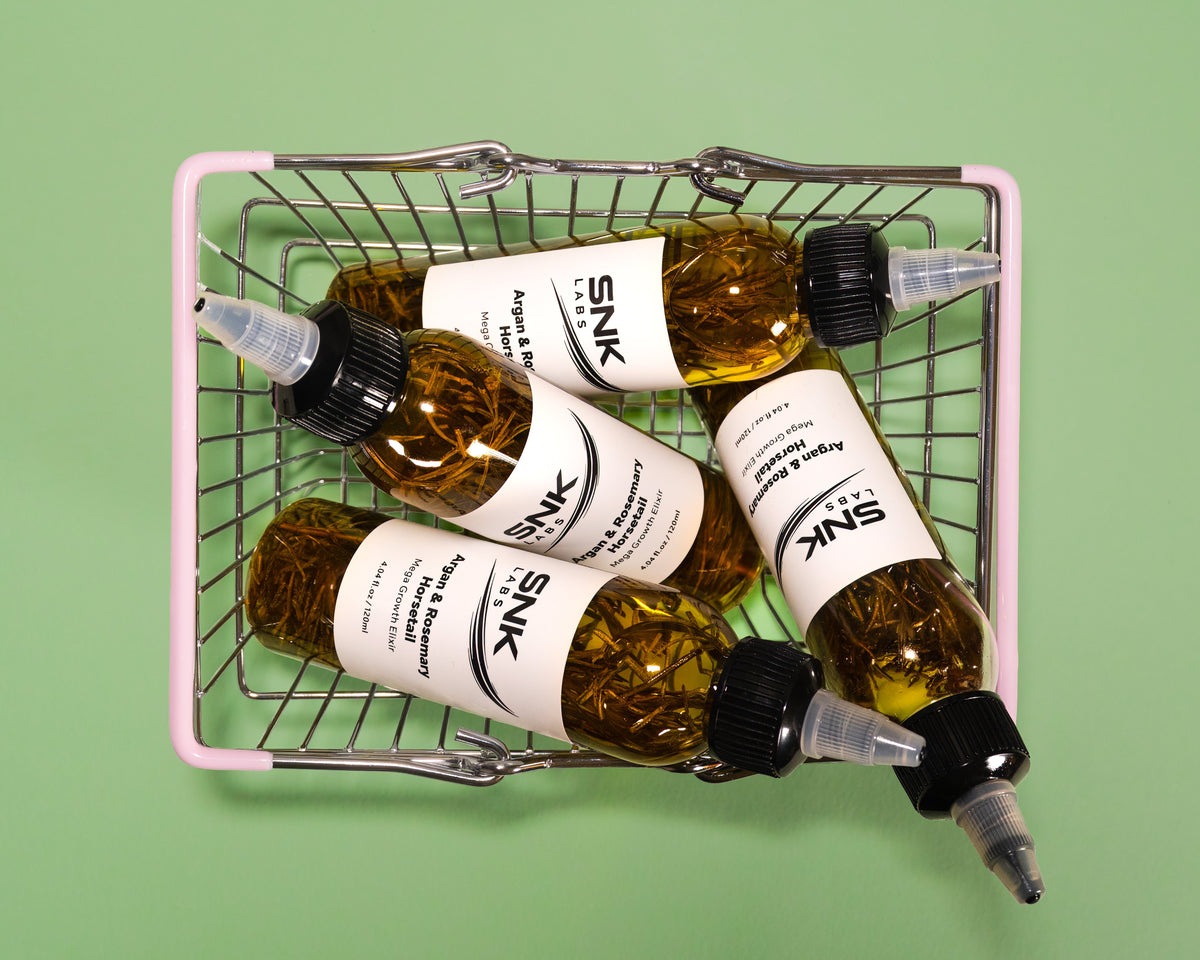
The SNK Labs Hair Growth Elixir uses turmeric root extract alongside ginger and rosemary, on a base of grape seed and camellia seed oils. Browse the rest of our haircare range.
Traditional roots. Modern formulation.
Individual results may vary. This product is intended for cosmetic use only.