


What Hyaluronic Acid Actually Does (And What It Doesn't)
🛍 Shop the Collagen Night Wrapping Mask →

Hyaluronic acid is a humectant, it draws water into the outer layers of your skin and holds it there. That's why skin looks plumper and feels more comfortable when well hydrated. It doesn't rebuild anything, and applied to dry skin in a dry environment it can actually make things worse.
Hyaluronic acid has become the default hydrating ingredient in skincare, and one of the most misunderstood. It's sold with language that implies restoration and repair, when what it actually does is considerably simpler, and considerably easier to get wrong.
Here's what it does, why the molecular weight conversation matters, and the one application mistake that turns a good ingredient into a counterproductive one.
The Short Answer
Hyaluronic acid is a humectant. Humectants attract water molecules and hold onto them. Applied to your skin, hyaluronic acid binds water in the outer layers, and skin that's holding water looks smoother and plumper and feels more comfortable.
That's the whole mechanism. It's not doing anything structural, it's not stimulating anything, and it isn't being absorbed and put to work somewhere deeper. It's holding water at the surface, which is genuinely useful and much less dramatic than the marketing suggests.
How Humectants Actually Work
Your skin's outer layer holds a certain amount of water, and that water is what keeps skin looking and feeling supple. Lose too much and skin feels tight, looks dull, and shows texture more obviously.
Humectants intervene by attracting water and keeping it where you want it. They draw it from two places: the environment around you, and the deeper layers of your own skin.
That second source is the important part, and it's where things can go wrong. In humid conditions, a humectant pulls moisture from the air. In dry conditions there's nothing in the air to pull from, so it draws more heavily on your own skin, which can leave you worse off than before you applied it.
Hyaluronic acid isn't the only humectant, and it isn't the best-value one. Glycerin is cheaper, at least as well studied, and does the same job reliably. Our guide to skincare ingredients in plain English sets out the full humectant family and how to spot them on a label.
Why Molecular Weight Matters
You'll see hyaluronic acid described as multi-weight, or listed several times on one ingredient panel under different names. That's not padding, there's a real reason for it.
Hyaluronic acid can be manufactured at different molecular sizes. Larger molecules stay on the surface, where they hold water and give an immediate plumping effect. Smaller fragments sit slightly further into the outer layers, distributing hydration a little more evenly rather than only at the very top.
A formula using several weights spreads that hydration across the surface layers instead of concentrating it in one place. It's a sensible formulation choice.
Two things to be sceptical about, though. First, none of this reaches the dermis "deep hydration" in skincare means the outer layers, not deep in any anatomical sense. Second, the counting has become marketing. If a bottle advertises a specific number of hyaluronic acid forms, turn it over and count the entries on the ingredient list yourself. The two don't always agree, and the ingredient list is the one that's legally required to be accurate.

The Mistake Most People Make
This is the section worth screenshotting, because it's the difference between hyaluronic acid working and hyaluronic acid backfiring.
Apply it to damp skin, then seal it with something on top.
Two steps, and both matter:
- Damp skin, not dry. Apply within a minute of cleansing, while your face is still slightly wet. This gives the humectant water to grab hold of immediately, rather than sending it looking through your own skin for moisture.
- Seal it with a moisturiser. A humectant draws water in; it doesn't stop it leaving again. Without something occlusive on top, that water evaporates and takes some of your skin's own moisture with it.
Applying hyaluronic acid to bone-dry skin in a dry room and then leaving it bare is genuinely counterproductive. If you've ever found a hydrating serum made your skin feel tighter, this is almost certainly why, and it's a technique problem rather than a product problem.
Australian conditions make this more relevant than it sounds. Air conditioning in summer and heating in winter both strip humidity out of indoor air for most of the year.
What Hyaluronic Acid Won't Do
Being direct about the limits, because they're rarely stated.
- It won't rebuild collagen or change your skin's structure. It's a humectant. Anything structural is outside what it does, we covered the same ground on collagen in does collagen cream actually work?
- It won't treat any skin condition. It's a cosmetic hydrating ingredient, nothing more
- It won't fix a compromised barrier on its own. Hydration and barrier support are different jobs; humectants do the first
- The effect isn't permanent. Stop using it and hydration returns to whatever your skin and routine sustain
How to Fit It Into a Routine
Simple, and it barely adds time.
- Cleanse and don't fully dry your face
- Apply your hydrating serum to damp skin, patting rather than rubbing
- Moisturise to seal it in, this step is not optional
- Sunscreen in the morning, always
- An overnight treatment in the evening, if you use one
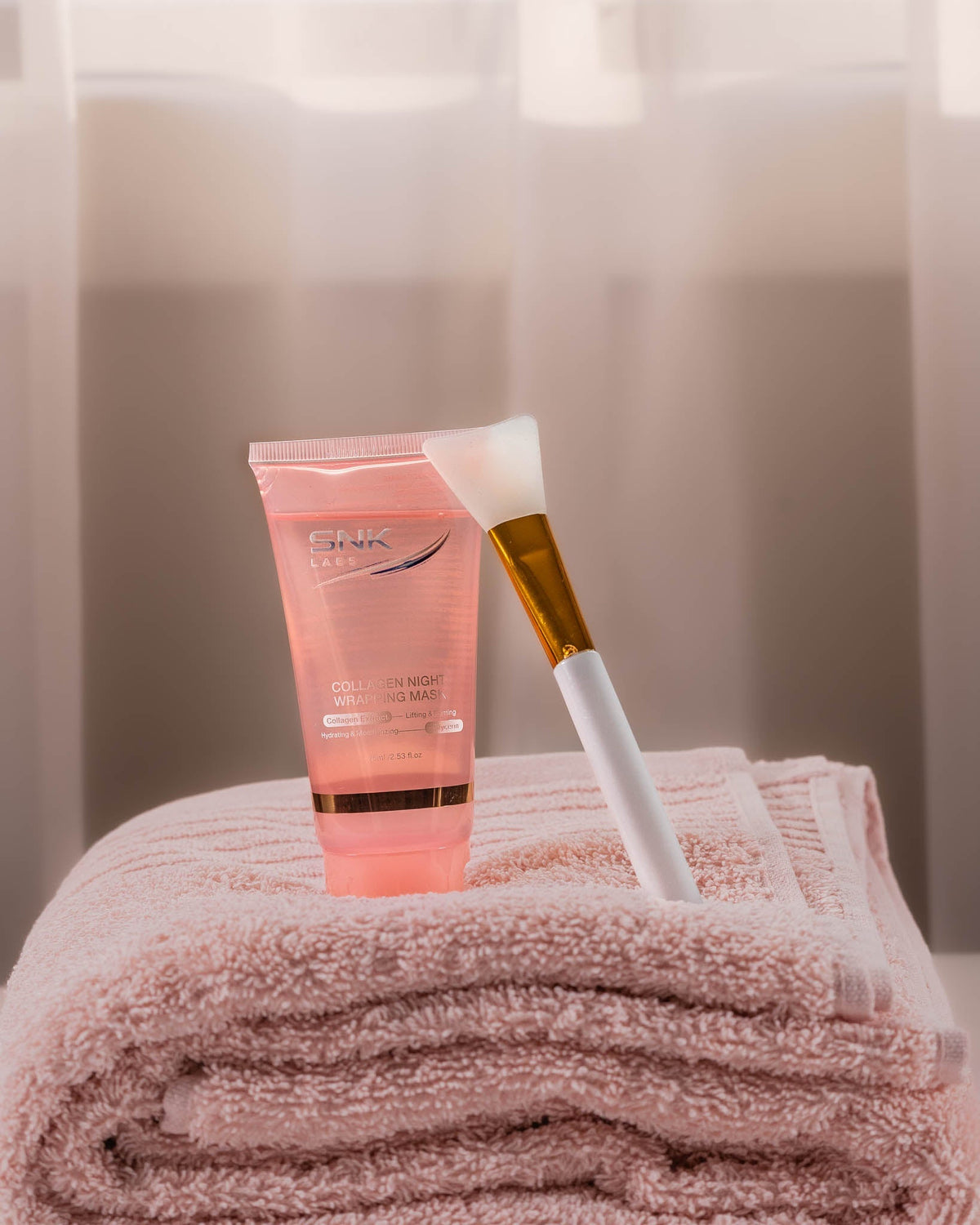
Worth saying plainly: our own Collagen Night Wrapping Mask doesn't contain hyaluronic acid. It uses glycerin and trehalose, different humectants doing the same job, combined with an overnight film that slows how quickly that moisture escapes. It's the sealing step in the routine above rather than the humectant step, and we'd rather explain that than let the name do the implying.
Frequently Asked Questions
Should I apply it to wet or dry skin?
Damp skin, within about a minute of cleansing. A humectant needs water available to bind, and damp skin provides it. Applying to fully dry skin means it draws more heavily on the moisture already in your skin, which can leave you feeling tighter rather than more hydrated.
Can hyaluronic acid actually dry out your skin?
Yes, in the wrong conditions. In dry air, with nothing to draw from the environment, it pulls water from deeper in your skin, and without a moisturiser sealing it, that water evaporates. Apply to damp skin and always seal it, and this doesn't happen.
Can I use it every day?
Yes, morning and evening if you like. It's a hydrating ingredient rather than an active, so there's no need to build tolerance or space out applications. Consistency matters far more than quantity.
What's the difference between hyaluronic acid and sodium hyaluronate?
Sodium hyaluronate is the salt form. It's more stable in a formula and has a smaller molecular size, so it's what most products actually use. Functionally they do the same job, if you see sodium hyaluronate on a label rather than hyaluronic acid, nothing is missing.
Do I still need a moisturiser if I'm using a hydrating serum?
Yes, and this is the most common gap in a routine. A humectant draws water in but does nothing to stop it leaving. The moisturiser is what holds it there. Serum without moisturiser is half a step.
The Takeaway
Hyaluronic acid is a good ingredient doing a simple job, sold with language that suggests a complicated one. It holds water at the surface of your skin, and hydrated skin looks and feels better. That's it, and that's enough.
Get the technique right and it works well: damp skin, then seal it. Get it wrong and you can end up worse off than doing nothing. Very few ingredients depend so heavily on how you apply them.
Our Collagen Night Wrapping Mask handles the sealing half of that equation, humectants to draw water in, an overnight film to keep it there. You can see it alongside the rest of our skincare range.
Damp skin. Then seal it.
Individual results may vary. This product is intended for cosmetic use only.