

Head Spa at Home: A Simple Scalp Care Ritual
🛍 Shop the SNK Labs Hair Growth Elixir →

A head spa is a scalp-focused treatment built around cleansing, massage and hydration — traditionally done in a salon, but the core of it works perfectly well at home. Set aside twenty minutes, oil the scalp, massage properly, and wash out the next morning. It won't change your hair's genetics, but your scalp will feel markedly better.
If you've seen the videos — someone reclined over a basin, warm water running through their hair, a therapist working slowly across their scalp — you've seen a head spa. The Japanese and Korean styles of the treatment have become two of the most-searched things in haircare, and salons here are booking out weeks ahead.
It's also, at its heart, quite simple. Most of what makes a head spa work isn't equipment or product. It's attention, technique and time — three things you already have. Here's how to do a genuine version at home, and an honest account of what it will and won't do.
What a Head Spa Actually Is
Strip away the setting and a head spa is four things in sequence: cleansing the scalp properly, massaging it thoroughly, treating it with something nourishing, and giving the whole process enough time to be worth doing.
The salon version adds warm water, steam, professional technique and someone else's hands — which is a genuinely different experience, and worth doing if you enjoy it. But the scalp doesn't know it's in a salon. The mechanical parts are reproducible at home.
What you can't easily reproduce is the relaxation of having it done to you. Worth being honest about that. If the appeal is being looked after for an hour, book the salon. If the appeal is a healthier, more comfortable scalp, home is fine.
| Element | Salon head spa | At home |
|---|---|---|
| Scalp cleansing | Professional wash, often with steam | Perfectly achievable |
| Massage | Trained hands, longer duration | Achievable with technique |
| Treatment | Salon products, 20–30 minutes | Better — you can leave it overnight |
| Relaxation | The main draw | Not the same. No pretending otherwise |
| Cost in Australia | Around $70 for an express session, $150–$250 for a standard hour, up to $450 for a premium ritual | The cost of an oil |
Why the Scalp Became the Centre of Haircare
For years haircare meant caring for hair — the visible length, the bit you can see. The shift over the last few years has been toward treating the scalp as skin, because that's what it is.
The logic is straightforward once you see it. The hair on your head has already been made; it's a structure of keratin with no active biology left in it. You can protect and condition it, but you can't improve it from within. The scalp is the only part of the system where anything is still happening.
And scalp skin gets treated far worse than facial skin. It's stripped by frequent washing, exposed to sun without protection, dried by heat tools, and then ignored entirely. Nobody would treat their face that way.
If you want the underlying biology, our guide to the hair growth cycle covers why hair operates on the timeline it does — and why scalp care is a long game rather than a quick fix.
The Five-Step At-Home Head Spa
Twenty minutes of active effort, plus a night of doing nothing. Best done on an evening when you're not in a hurry.
- Brush first, on dry hair. Work through any tangles before anything else. Brushing also lifts loose flakes and shed hairs away from the scalp, which makes the next steps more effective.
- Section the hair and apply oil directly to the scalp. Part your hair in rows and apply along each parting — five to eight drops for shorter hair, ten to fifteen for longer. The scalp is the target, not the lengths.
- Massage for a full five minutes. Fingertips, not nails, in small slow circles. Start at the hairline and work back through temples, crown, the back of the head, and finish at the nape. Five minutes feels longer than you expect — set a timer.
- Leave it overnight. This is where home beats the salon. An hour is good; a full night is better. Use an old pillowcase or wrap your hair in a towel.
- Wash out properly in the morning. Shampoo before adding water — apply it straight onto the oiled hair, work it through, then rinse. Adding water first makes the oil far harder to shift, which is why people end up washing twice.
That's the whole thing. No tools required, though a silicone scalp massager helps if your hands tire. Our step-by-step guide to scalp massage technique goes deeper on step three, which is the one most people rush.

How Often, and When
Once a week is the sensible default. Twice if your scalp runs dry; once a fortnight if it runs oily. More often isn't better — it just means more washing, and that's how routines quietly get abandoned.
Sunday evening suits most people, because it lands the wash on a morning when there's time to do it properly. Pick a night that reliably works rather than the night that sounds most virtuous.
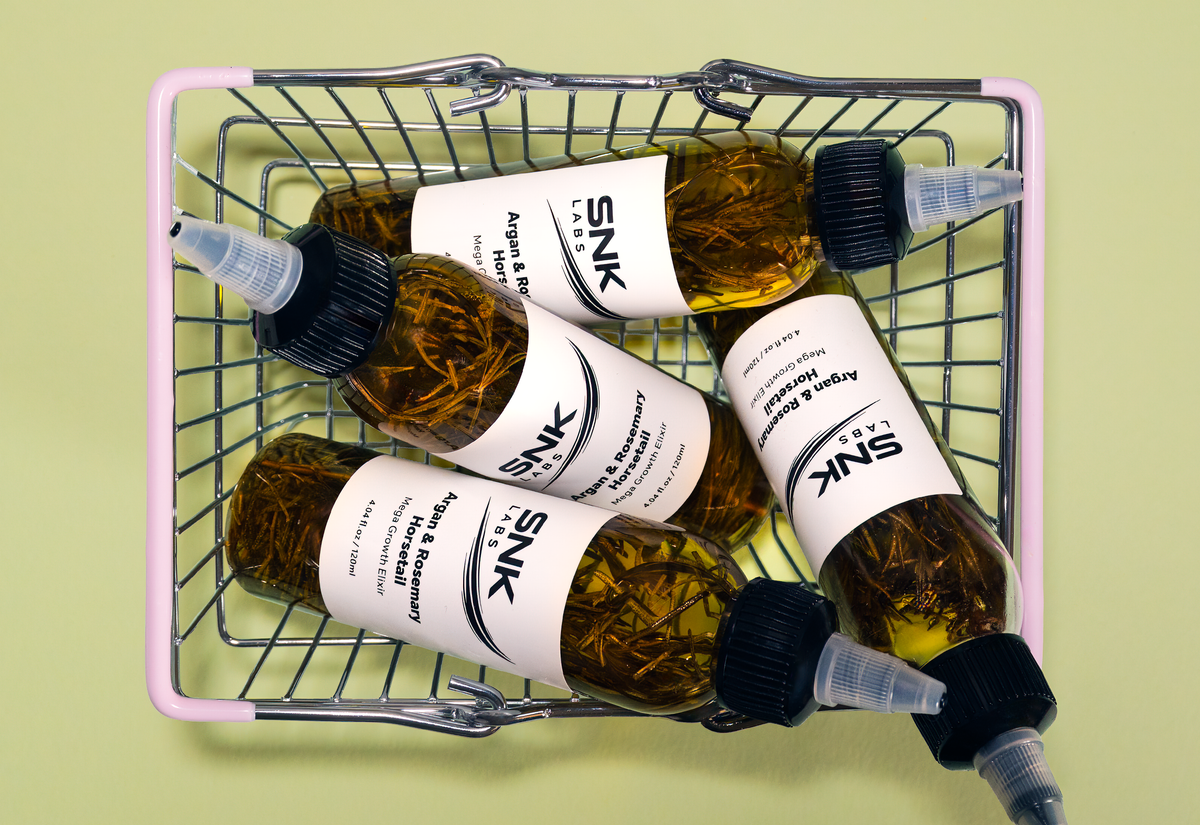
On what to use: a lightweight oil that won't sit on your hair for three washes. Grape seed and camellia seed oils are among the lightest botanical options, which is why they form the base of the SNK Labs Hair Growth Elixir, with rosemary, ginger and rice germ through the middle. Heavy oils like coconut and castor work for some people, but they're the reason others give up on oiling entirely.
Winter Scalps, Australian Homes
Scalp discomfort tends to peak in winter here, and it's mostly environmental rather than anything going wrong.
Indoor heating dries the air considerably. Hot showers — more tempting in August than January — strip more oil than warm ones. Wet hair tied up under a beanie stays damp for hours. Each of these is minor; together they explain why a scalp that behaved all summer suddenly feels tight and flaky by the end of winter.
None of it needs a product to solve, strictly speaking. Cooler showers, drying hair before covering it, and a weekly oil treatment will handle most of it.
What a Head Spa Won't Do
Worth stating plainly, because the videos imply otherwise.
A head spa is a cosmetic treatment. It won't regrow hair, reverse hair loss, or change the density you were born with. None of those are within reach of massage and oil, and any brand suggesting they are is overreaching.
What it will do: leave your scalp cleaner and more comfortable, condition hair so it's softer and less prone to snapping, distribute your natural oils more evenly, and give you twenty genuinely pleasant minutes. That's a fair return for the effort.
And if you're dealing with sudden, patchy or rapid shedding, persistent itching, or scalp pain — see a GP or dermatologist. That's a medical question, and a head spa is the wrong tool for it. Using one instead of getting advice costs you time you may not want to lose.
Frequently Asked Questions
How often should I do a head spa at home?
Once a week suits most people. Twice weekly if your scalp is on the drier side, once a fortnight if it's oilier. There's no advantage to doing it more often, and over-frequent oiling mostly creates more washing rather than a healthier scalp.
Do I need a scalp massager, or are hands enough?
Hands are enough. Fingertips give you better control over pressure, particularly around the hairline and temples. A silicone massager is useful if your hands tire during longer sessions or you prefer using one in the shower, but it isn't necessary.
Should I do it on wet or dry hair?
Dry hair, for the oiling step. Oil and water don't mix, so applying to damp hair leaves it sitting on the surface rather than reaching the scalp. Dry hair also makes it much easier to part sections and work along each parting properly.
Will one session make a difference?
Your scalp will feel better immediately and hair will look softer and shinier after the first wash. Anything cumulative takes considerably longer — think in terms of three months of weekly sessions, because that's the pace the hair growth cycle sets.
Is a salon head spa worth the money?
If you want the experience of being looked after, yes — it's genuinely relaxing and you can't replicate that alone. But at $150 to $250 for a standard session in Australia, a weekly home routine will do more for your scalp over a year than four salon visits, simply because consistency matters more than intensity.
The Takeaway
The head spa trend is one of the more useful things to come out of beauty social media, because the underlying idea is sound: your scalp is skin, it deserves the same care as your face, and it has been neglected for years.
You don't need a salon to act on that. Brush, oil the scalp, massage for five minutes, sleep on it, wash it out properly. Once a week, for a few months. It's unglamorous and it works.
For more on choosing an oil and what to realistically expect from one, our Australian guide to hair growth oils covers it in full — or browse the rest of our haircare range.
Slow down. Start at the scalp.
Individual results may vary. This product is intended for cosmetic use only.