

Hair Growth Oils: An Australian Guide to Scalp and Hair Health
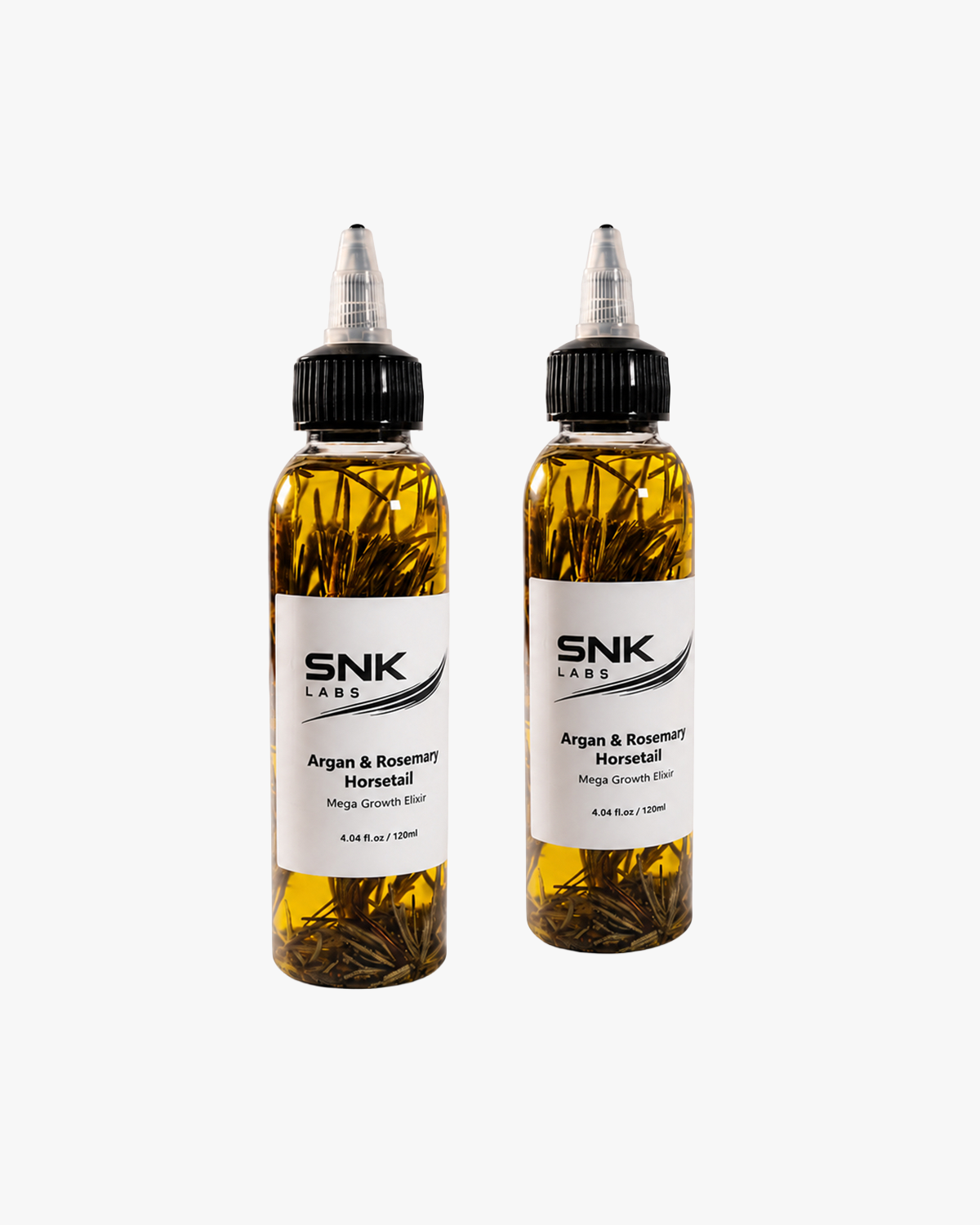
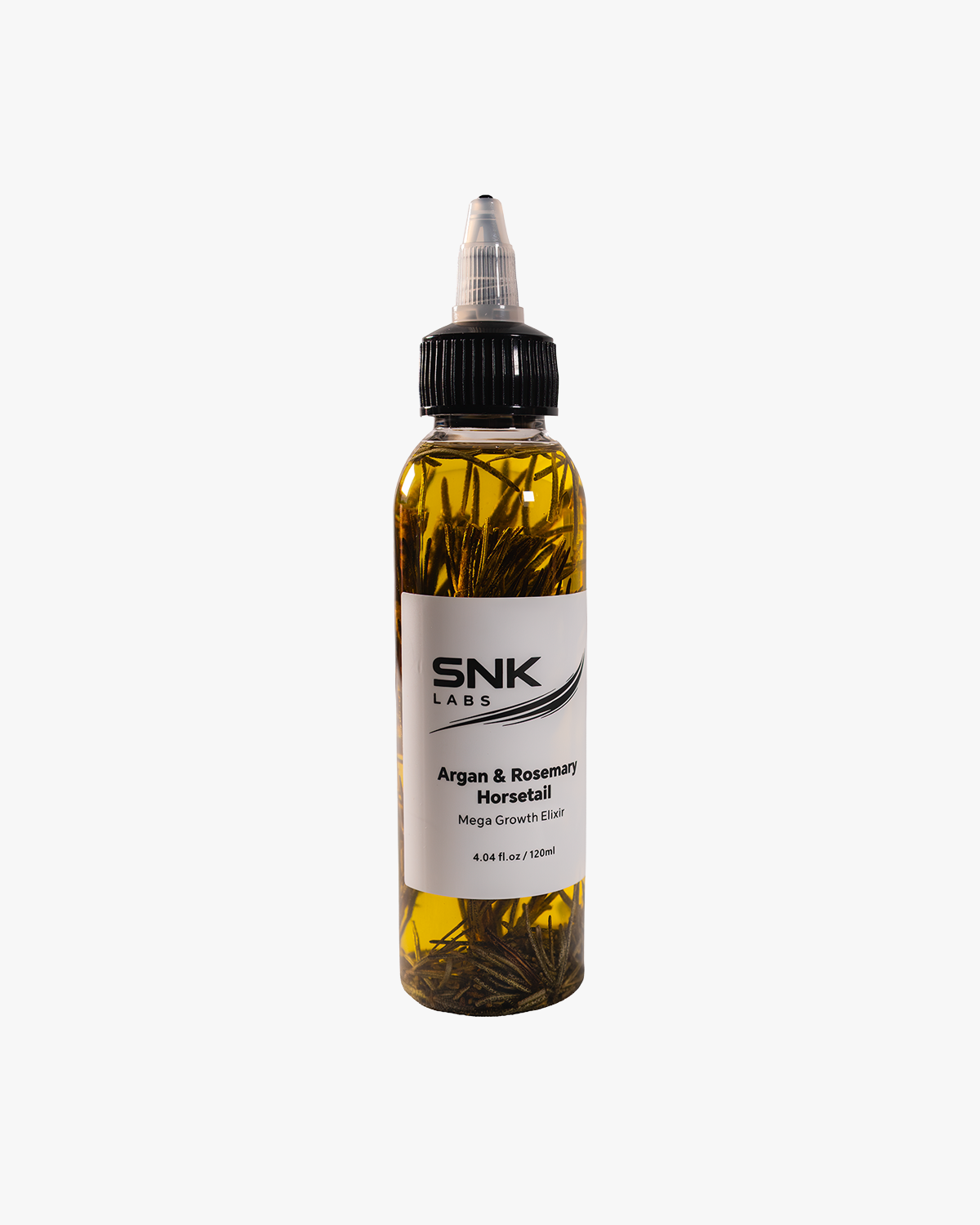
🛍 Shop the SNK Labs Hair Growth Elixir →

Hair oils work by conditioning the hair shaft and supporting a healthy scalp environment — the foundation healthy-looking hair grows from. They won't change your genetics or reverse hair loss, but used consistently, the right oil can leave hair softer, shinier and less prone to breakage.
If you've spent any time in the haircare aisle lately, you'll have noticed oils are everywhere. Rosemary, castor, batana, rice water — each arriving with a wave of before-and-after videos and the suggestion that this one is different.
Some of that attention is earned. Oils have been used on hair and scalp for a very long time, across a lot of cultures, for reasons that hold up reasonably well under scrutiny. But the gap between what a good hair oil does and what the internet claims it does has grown wide enough to cause a real problem: when people expect the wrong thing, they give up at week three and conclude that nothing works.
This guide is our attempt to close that gap. What oils genuinely do, which ingredients are worth paying attention to, how to actually use them, and — the part most guides skip — what to realistically expect, and when.
What Hair Oil Actually Does — And What It Doesn't
Let's start with the limitation, because it makes everything after it more useful.
A hair oil is a cosmetic product. It works on the surface of your hair and scalp, not on the biology underneath them. It cannot change the follicles you were born with, it cannot alter hormonal patterns, and it is not a treatment for hair-loss conditions. If you're experiencing sudden, patchy or rapid shedding, that's a conversation for a GP or dermatologist — not for a bottle of oil, ours included.
What a well-formulated oil can do is meaningful, though:
- Condition the hair shaft — lightweight oils coat the outer layer of the hair, smoothing the cuticle so strands feel softer and reflect more light
- Reduce moisture loss — a thin occlusive layer slows how quickly water escapes from the hair, which matters enormously in dry or air-conditioned environments
- Help reduce the appearance of breakage — better-conditioned hair is more flexible, and flexible hair snaps less during brushing, tying and styling
- Nourish the scalp — scalp skin is skin, and it responds to being looked after in the same way the skin on your face does
- Improve softness and shine — the most immediate and most visible effect, usually noticeable from the first few uses
Notice what's not on that list. Nothing about regrowth, nothing about density, nothing about reversing anything. That's deliberate. Those claims are common in this category and they are, almost without exception, unsupportable.
Why the Scalp Matters More Than the Hair
Most people treat hair oil as a hair product. It's more useful to think of it as a scalp product that happens to benefit your hair on the way past.
Here's the reasoning. The visible length of your hair is biologically inert — it's a structure of keratin that has already been made. You can protect it, condition it and slow its deterioration, but you cannot improve it from the inside, because there is no inside process still running. The only place anything is actively happening is the scalp.
Scalp skin has the same needs as facial skin, and it's routinely treated far worse. It gets stripped by frequent shampooing, baked by sun, dried by heat tools, and then largely ignored. A scalp that's tight, flaky or persistently itchy is a scalp under stress — and while looking after it won't override genetics, it does create better conditions for the hair that is growing.
This is the whole logic behind an overnight oil. It isn't a styling product applied to lengths for shine. It's a treatment applied to skin, left long enough to be useful, and washed out the next day.
If you'd like the underlying biology in more detail, our guide to understanding the hair growth cycle explains why timelines in haircare are as long as they are — and why patience isn't just a nice idea, it's a structural requirement.
The Ingredients Worth Looking For
Hair oil formulations range from a single carrier oil in a nice bottle to genuine multi-botanical blends. Here's what's actually worth paying attention to on a label.
Rosemary oil is the most-discussed botanical in haircare right now, and the interest isn't baseless — it's among the more-studied botanical ingredients in the category, which is part of why it appears in so many formulations. That said, most of the research is small-scale, outcomes vary between individuals, and it remains a cosmetic ingredient rather than a treatment. Our full, properly hedged look at what the rosemary oil research actually says goes further into it than a section here allows.
Camellia seed oil and grape seed oil are the workhorses, and they're the reason a good oil doesn't feel heavy. Both are light, absorb readily, and condition without leaving hair looking greasy — which is the single most common reason people abandon oiling.
Vitamin E (tocopherol) does two jobs: it conditions hair and scalp, and it helps protect the oil blend itself from oxidising in the bottle.
Essential oils like lavender and tea tree contribute to the sensory experience and help keep the scalp feeling fresh — but they must be properly diluted in a carrier. Never apply an undiluted essential oil directly to your scalp.
And what to be sceptical of: the ingredient named on the front of the bottle isn't necessarily present in a meaningful amount. A formula can be titled after a botanical that sits second-last on the ingredient list, above the preservative. Turn the bottle over. Order tells you a great deal.
| Ingredient | What it does | What it doesn't do |
|---|---|---|
| Rosemary oil | Supports a healthy scalp environment; conditions | Treat hair-loss conditions |
| Camellia seed oil | Deep conditioning; smoothness and shine | Change hair texture permanently |
| Grape seed oil | Lightweight moisturising without heavy residue | Penetrate to the follicle |
| Vitamin E | Antioxidant; conditions hair and scalp | Repair split ends permanently |
| Tea tree oil | Helps the scalp feel clean and fresh | Treat scalp conditions medically |
How to Use Hair Oil Properly
This is where most of the value is, and where most people go wrong. Technique matters more than the specific product.
- Use less than you think. Roughly 5–8 drops for shorter hair, 10–15 for longer or thicker hair. Applying more doesn't accelerate anything — it just extends how long you'll be washing it out.
- Apply to the scalp, not the lengths. Part your hair in sections and apply directly to the skin, working from the crown outward. A few drops through the mid-lengths and ends afterwards is fine, but the scalp is where the effort should go.
- Massage it in for two to three minutes. Use your fingertips, not your nails, moving in small, slow circles. This distributes the oil evenly and is a genuinely pleasant part of the routine. Our guide to scalp massage technique covers this properly.
- Leave it long enough to be worth doing. A minimum of thirty minutes; overnight is better. Anything under fifteen minutes is largely decorative.
- Wash it out thoroughly. Shampoo before adding water — apply shampoo directly to oiled hair, work it through, then rinse. Adding water first makes the oil far harder to lift, which is why people end up washing twice.
Apply to dry hair rather than wet. Oil and water don't mix, and wet hair is already carrying moisture the oil will simply sit on top of. Dry hair lets the oil reach the scalp properly.
Building a Simple Scalp Care Routine
The routine that works is the one you'll actually keep doing. Ours has three steps and takes about five minutes of active effort.
- Oil twice a week — pick two nights that reliably suit you. Sunday and Wednesday works well for a lot of people because it lines up with wash days
- Massage every time — the two to three minutes is not optional; it's most of the benefit
- Wash properly the next morning — shampoo first, water second, and don't skip conditioner on the lengths
Around that, the ordinary things matter more than people expect: try not to tie hair tightly while it's wet, use heat tools at lower settings, and protect your scalp from sun in the same way you'd protect your face. In Australian conditions that last point is genuinely important, and hats do more for your hair than most products will.
If breakage rather than dryness is your main concern, our guide to why hair breaks and how to reduce it covers the habits that make the biggest difference.
What to Realistically Expect, and When
Here's an honest timeline, and it's longer than most brands will tell you.
- First few uses — softer hair, more shine, a scalp that feels more comfortable. These are surface effects and they're immediate
- Four to six weeks — less breakage during brushing and styling, if you've been consistent. Hair that snaps less is hair that keeps its length
- Three months and beyond — this is the realistic horizon for anything cumulative, and it's dictated by the growth cycle rather than by the product
Consistency beats intensity, comfortably. Twice a week for three months will do more than daily application for a fortnight followed by abandoning the bottle in a drawer. Results also vary between individuals — that isn't a hedge, it's simply true, and any brand telling you otherwise is telling you something they can't know.
Five Common Mistakes
- Using far too much. The most common error by a distance. It doesn't improve the outcome and it makes washing out a chore, which is how routines die.
- Applying only to the ends. Understandable — that's where damage is visible — but it skips the only part of your hair that's actually alive.
- Rinsing without shampooing first. Water hits oiled hair and beads straight off. Shampoo first, always.
- Quitting at three weeks. The point at which the surface effects feel unremarkable and the cumulative ones haven't arrived. This is precisely when consistency starts to matter.
- Expecting an oil to solve a medical issue. If shedding is sudden, patchy or rapid, see a healthcare professional. A cosmetic product is the wrong tool, and using one instead of getting advice costs you time you may not want to lose.
Frequently Asked Questions
How often should I use hair oil?
Twice a week suits most people. If your scalp is on the drier side you may prefer three times; if it's oilier, once is plenty. There's no benefit to daily use, and over-application tends to make washing harder rather than making hair healthier.
Should I apply it to wet or dry hair?
Dry hair. Oil and water don't mix, so applying to damp hair leaves the oil sitting on the surface rather than reaching the scalp. Dry application also makes it much easier to part sections and work the oil into the skin properly.
Will it make my hair greasy?
Not if you use the right amount and wash it out correctly. Greasiness almost always traces back to over-application or rinsing with water before shampooing. Start with fewer drops than you think you need, and shampoo directly onto oiled hair.
How long before I notice a difference?
Softness and shine usually show up within the first few uses. Reduced breakage tends to become noticeable around four to six weeks of consistent use. Anything cumulative sits at three months or beyond, because that's the pace the hair growth cycle sets.
Can I use it if my scalp is already oily?
Yes, though less often — once a week is a sensible starting point. An oily scalp isn't the same as a well-conditioned one, and many people find a lightweight oil used before washing is perfectly comfortable. Reduce the amount and pay attention to how your scalp responds.
The Takeaway
A hair oil is not a shortcut, and any product sold as one is being sold dishonestly. What it is, used properly and consistently, is one of the more pleasant and lower-effort ways to look after your scalp and protect the hair you already have.
Start at the scalp. Use less than you'd expect. Give it two to three minutes of massage and at least half a night. And judge it at three months, not three weeks.
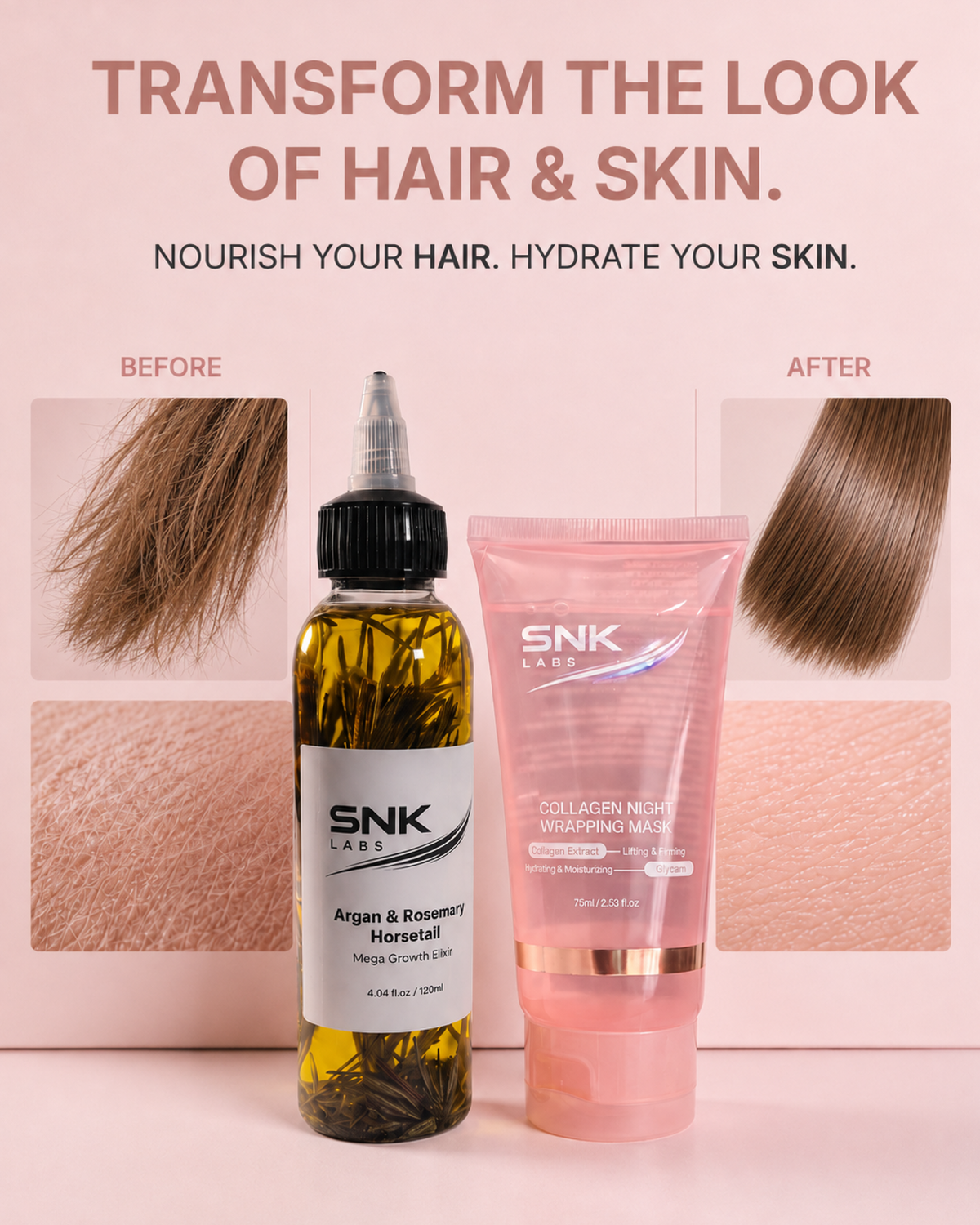
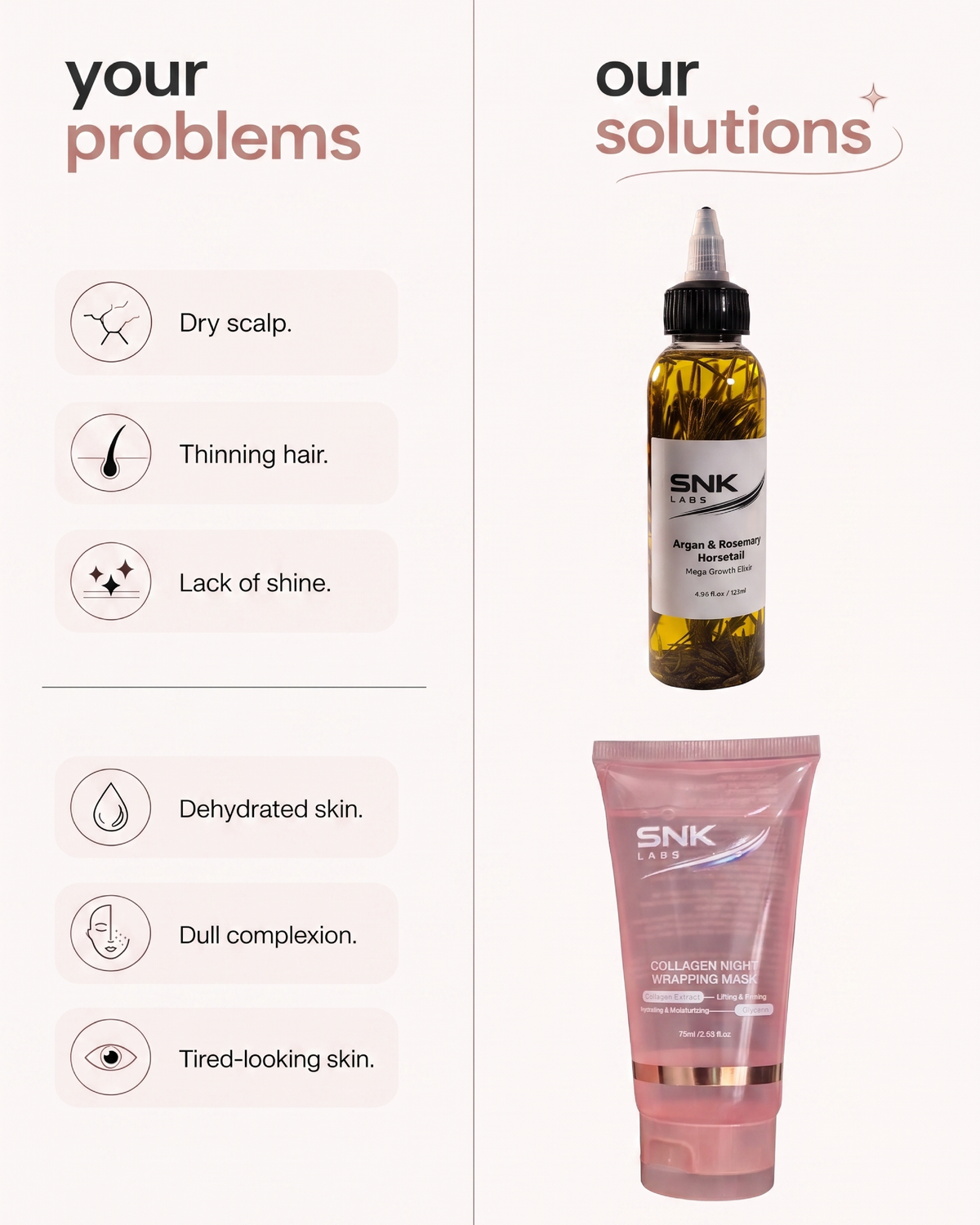
The SNK Labs Hair Growth Elixir is a lightweight botanical blend built around exactly this approach — grape seed and camellia seed oils as the base, rosemary, ginger and rice germ through the middle, and vitamin E to hold it together. You can see it alongside the rest of our haircare range.
Start at the scalp. Be consistent. Give it time.
Individual results may vary. This product is intended for cosmetic use only.