


Is Mineral Oil Bad for Your Skin? An Honest Answer
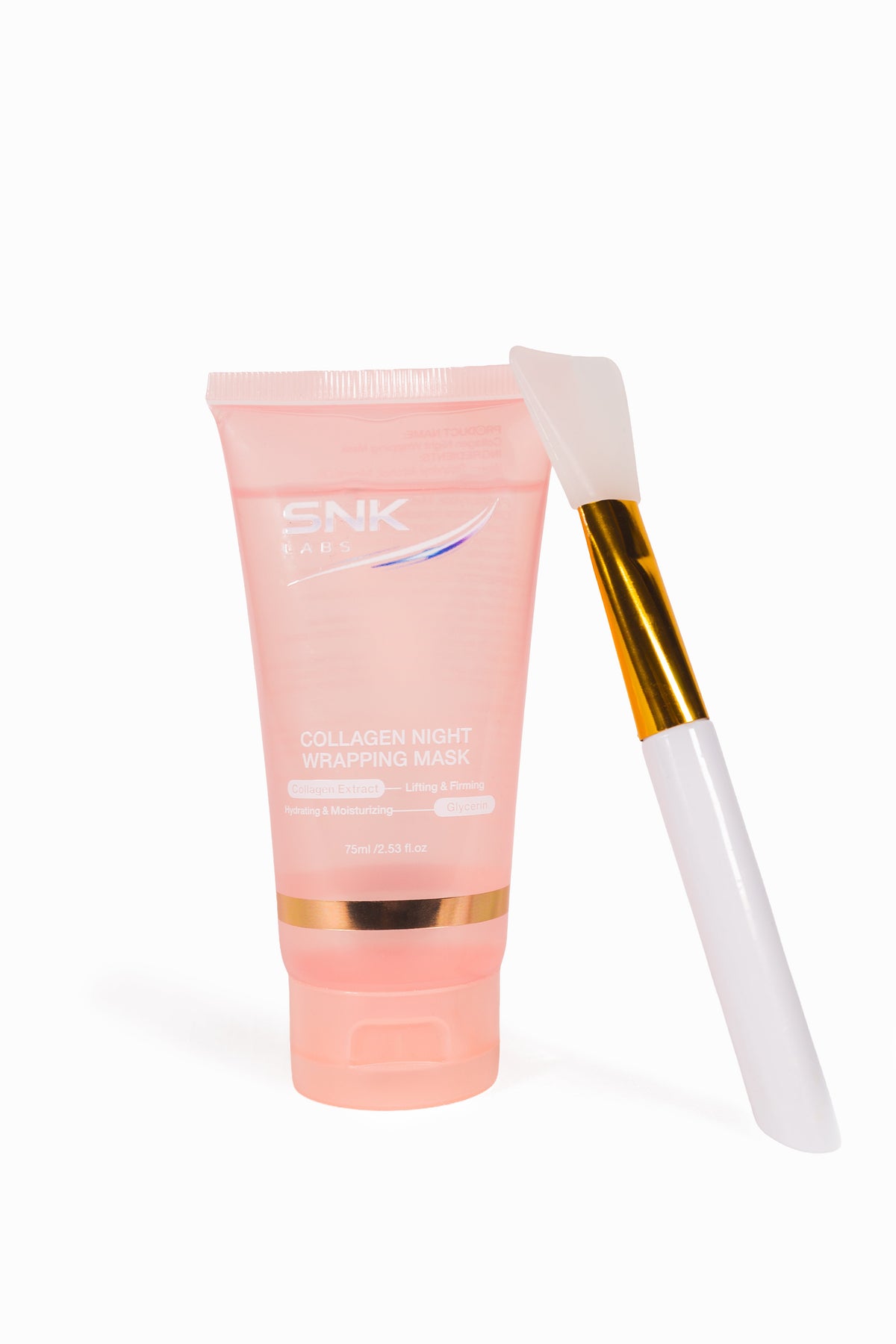
🛍 Shop the Collagen Night Wrapping Mask →

No. Cosmetic-grade mineral oil is one of the most studied and most tightly regulated ingredients in skincare, and it is not absorbed into the bloodstream or stored in the body. It works as an occlusive, forming a film that slows water loss from the skin. The fair criticism isn't that it's harmful, it's that it seals without nourishing.
Few ingredients attract as much fear as mineral oil. Search it and you'll find it described as petrol for your face, as something that suffocates skin, as a toxin your body absorbs in seconds.
Almost all of that content is published by brands selling mineral-oil-free alternatives. That doesn't make it automatically wrong, but it's worth knowing who's talking.
We should declare our own position: our Collagen Night Wrapping Mask contains mineral oil. So we have an interest here too. What follows is our honest attempt at the actual picture — including the criticism that we think is fair.
What Mineral Oil Actually Is
Mineral oil is a highly refined liquid hydrocarbon derived from petroleum. On labels it appears as mineral oil, paraffinum liquidum, liquid paraffin or white oil.
The word petroleum is doing most of the emotional work in that sentence, so it's worth being precise. Cosmetic-grade mineral oil goes through extensive refining specifically to remove impurities. The refined product has essentially nothing in common with crude oil beyond its origin, in the same way table salt has nothing in common with chlorine gas beyond an element.
It has been used in skincare for over a century, and in medicine longer than that. It remains second only to water as a moisturiser ingredient by volume.
What It Does on Your Skin
One job, done extremely well: occlusion.
An occlusive forms a physical film on the skin's surface that slows transepidermal water loss, the ordinary process by which moisture evaporates from your skin into the air. Slow that down and the skin underneath rehydrates and stays comfortable for longer.
That's why it appears so often in overnight products. You're asleep for eight hours in a room that's usually drier than your skin would prefer, and something needs to hold the moisture in.
In our own mask it works alongside the film-forming ingredients to do exactly that. The humectants, glycerin and trehalose, draw water in. The occlusive layer stops it leaving again. Our guide to skincare ingredients in plain English explains why those two jobs need each other.

The Four Claims, Examined
| The claim | What's actually the case |
|---|---|
| "Your skin absorbs it into your bloodstream" | Mineral oil molecules are too large to pass the skin barrier. It sits on the surface, that's the entire point of an occlusive |
| "It suffocates skin and blocks it from detoxing" | Skin doesn't breathe or detoxify, your liver and kidneys do that. Skin takes oxygen from your blood |
| "It clogs pores" | Cosmetic-grade mineral oil is generally considered non-comedogenic. Heavy formulas may not suit acne-prone skin, but that's the formula, not the ingredient |
| "It's a carcinogen" | This concerns untreated and mildly-treated industrial grades, not the refined cosmetic grade, which is regulated for purity |
The Criticism That Is Fair
Here's where we'd agree with the critics, and it isn't about safety.
Mineral oil seals, but it doesn't nourish. It contains no ceramides, no fatty acids, no vitamins, no antioxidants. It contributes nothing structural to your skin barrier. Plant-derived occlusives, squalane, jojoba, various seed oils, do the sealing job and bring lipids of their own.
That's a legitimate formulation argument, and a brand choosing plant lipids over mineral oil has a real reason for it. It just isn't the reason usually given. "It does less" is a defensible position. "It's toxic" isn't.
One genuine technical caveat worth knowing: contamination with certain hydrocarbon residues has been documented in lower grades, and it matters most in lip products, where ingestion is a direct route. Cosmetic-grade refining exists precisely to address this, and it's a quality-control question rather than an inherent property of the ingredient.
Why We Use It
An overnight wrapping mask has one core job: hold moisture against the skin for eight hours. Mineral oil is exceptionally reliable at that. It's stable, it doesn't oxidise, it doesn't go rancid, it has no scent of its own, and it's among the least allergenic ingredients available, which matters in a product sitting on your face all night.
We're not going to pretend it's a hero ingredient. It isn't. It's the part of the formula that stops the useful parts evaporating. The collagen, glycerin and trehalose do the conditioning and hydrating; the occlusive layer keeps them working.
Could we reformulate with a plant-derived occlusive? Yes, and it's a reasonable thing to consider. But we'd rather explain the choice than quietly swap an ingredient to avoid an argument we think is based on bad information.
Frequently Asked Questions
Is mineral oil absorbed into your bloodstream?
No. The molecules are far too large to pass through the skin barrier, which is why it works as an occlusive in the first place, it sits on the surface. Claims about rapid absorption into the bloodstream aren't supported by how skin actually works.
Does mineral oil clog pores?
Cosmetic-grade mineral oil is generally regarded as non-comedogenic. If a product containing it breaks you out, the cause is more likely the overall richness of the formula than the mineral oil specifically. Acne-prone skin often does better with lighter textures regardless of the occlusive used.
Is mineral oil safe in skincare?
Cosmetic-grade mineral oil is one of the more thoroughly assessed ingredients in cosmetics and is permitted under Australian and international regulations. It's also among the least allergenic ingredients available. No ingredient suits everyone, discontinue use if you notice irritation.
Is plant oil better than mineral oil?
For sealing alone, they perform similarly. Plant oils additionally supply lipids, fatty acids and antioxidants, so they do more. That's a fair reason to prefer them. It's a different argument from mineral oil being unsafe, and the two often get merged.
Why do so many brands say mineral oil free?
Partly formulation philosophy, and partly marketing, "free from" claims are an easy way to signal quality without making a positive claim that needs substantiating. Worth reading those lists with the same scepticism you'd apply to any other marketing.
The Takeaway
Mineral oil is safe, well studied, and very good at the specific thing it does. It's also unglamorous and contributes nothing structural to your skin, which is a genuine reason to prefer alternatives, just not the reason usually given.
If you've been avoiding it because you read that your skin absorbs it in twenty-six seconds, you can stop worrying. If you're avoiding it because you'd rather your occlusive did two jobs instead of one, that's a considered position and we'd not argue with it.
Our Collagen Night Wrapping Mask uses it as the sealing layer over humectants that do the hydrating. Browse the rest of our skincare range, or read our guide to whether collagen cream actually works.
Fewer scare stories. More ingredient lists.
Individual results may vary. This product is intended for cosmetic use only.