


Why Ceramides Matter More Than You Think
🛍 Shop the Collagen Night Wrapping Mask →

Ceramides are lipids that make up a large share of your skin's outer barrier, the layer that keeps moisture in and irritants out. When that barrier is compromised, skin feels tight, flaky and reactive. Applying ceramides tops up what's already there, which is why they suit sensitive and dehydrated skin so well.
Ceramides don't get the attention hyaluronic acid or vitamin C do. They're unglamorous, they don't produce an overnight difference, and they're hard to make sound exciting.
They're also, for a lot of people, the missing piece. If your skin feels tight after washing, stings when you apply things it used to tolerate, or has become unpredictably reactive, the problem is usually your barrier, and ceramides are what your barrier is largely built from.
What Ceramides Actually Are
Your skin's outer layer is often described as a brick wall: cells are the bricks, and a lipid mixture is the mortar holding them together. Ceramides are the largest component of that mortar, making up roughly half of it, alongside cholesterol and free fatty acids.
That mortar does two jobs at once. It keeps water inside your skin, and it keeps irritants, allergens and bacteria outside. When it's depleted, both directions fail simultaneously, moisture escapes more easily and things that used to be harmless start causing reactions.
Ceramides aren't an active ingredient in the usual sense. They're not changing how your skin behaves. They're replacing something that's already meant to be there and has been depleted. That distinction matters, and it's why they're so well tolerated.
What a Compromised Barrier Feels Like
Most people don't know this is what they're dealing with, because the symptoms get attributed to having sensitive skin or to the weather.
- Tightness after cleansing — that squeaky-clean feeling is a warning sign, not a sign of thorough washing
- Stinging when you apply products — particularly things you've used comfortably for months
- Flaking or rough patches that moisturiser doesn't seem to fix for long
- Sudden reactivity — redness or irritation from products, weather or fabrics that never bothered you before
- Dehydration that keeps returning no matter how much hydrating product you apply
The usual causes are cumulative rather than dramatic: over-cleansing, too many exfoliating acids, too many actives introduced at once, hot showers, harsh weather, and indoor heating or air conditioning.
That last point matters here. The most common cause of a compromised barrier is doing too much to your skin, not too little. The fix often involves removing steps rather than adding them.
Why Ceramides Work Differently
Most skincare actives work by changing something, stimulating turnover, interrupting pigment production, adjusting how the skin behaves. That's why they carry irritation risk and need introducing gradually.
Ceramides don't do that. They're a topping-up exercise. You're supplying a lipid your skin already makes and uses, in a form it recognises.
Two practical consequences. First, ceramides are unusually well tolerated, there's no adjustment period and no need to build up slowly. Second, they combine comfortably with almost anything, because they aren't competing for the same mechanism as your other products.
The trade-off is that nothing happens overnight. Hydration you feel in a day; barrier improvement takes four to six weeks of consistent use. Our guide to skincare ingredients in plain English sets out which category does which job and on what timeline.

Why the Type Matters
Ceramides aren't a single substance. Several types occur in human skin, and they appear on ingredient lists under names that look like codes.
- Ceramide NP — the most commonly used in skincare, and one of the most abundant in skin
- Ceramide AP — associated with barrier firmness and structure
- Ceramide AS — contributes to the overall lipid mix
- Ceramide NS / NG — another naturally occurring form
- Ceramide EOP — helps hold the lipid layers together
A formula using several types more closely resembles what your skin actually contains than one using a single ceramide. And there's a further point worth knowing: ceramides work better alongside cholesterol and fatty acids than alone. The barrier is a mixture, not a single ingredient, and the research on barrier support consistently points to the combination rather than any one component.
So when you're reading a label, a product with multiple ceramide types plus cholesterol is doing something more considered than one listing "ceramides" and nothing else.
What Ceramides Won't Do
Clear about the limits, as always.
- They won't repair your barrier at a cellular level. They support the barrier by supplying lipids to it. That's a meaningful difference from rebuilding it, and any product claiming the latter is overstating
- They won't treat eczema, dermatitis or any skin condition. Barrier support may make compromised skin more comfortable, but a diagnosed condition needs a GP or dermatologist
- They won't brighten, resurface or even out tone. Different job entirely
- They won't work in a week. Four to six weeks of consistency is the realistic window
How to Read a Ceramide Product Label
Four things worth checking.
- Are individual types named? "Ceramide NP" tells you something specific. "Ceramide complex" with no detail tells you nothing.
- Is cholesterol in there? Its presence suggests the formulator understood the barrier as a mixture rather than a single hero ingredient.
- How many types are listed? Count the actual entries rather than trusting the number on the front. The ingredient list is the part that has to be accurate.
- Is the rest of the formula sensible? Ceramides in a base full of fragrance and stripping surfactants is working against itself.
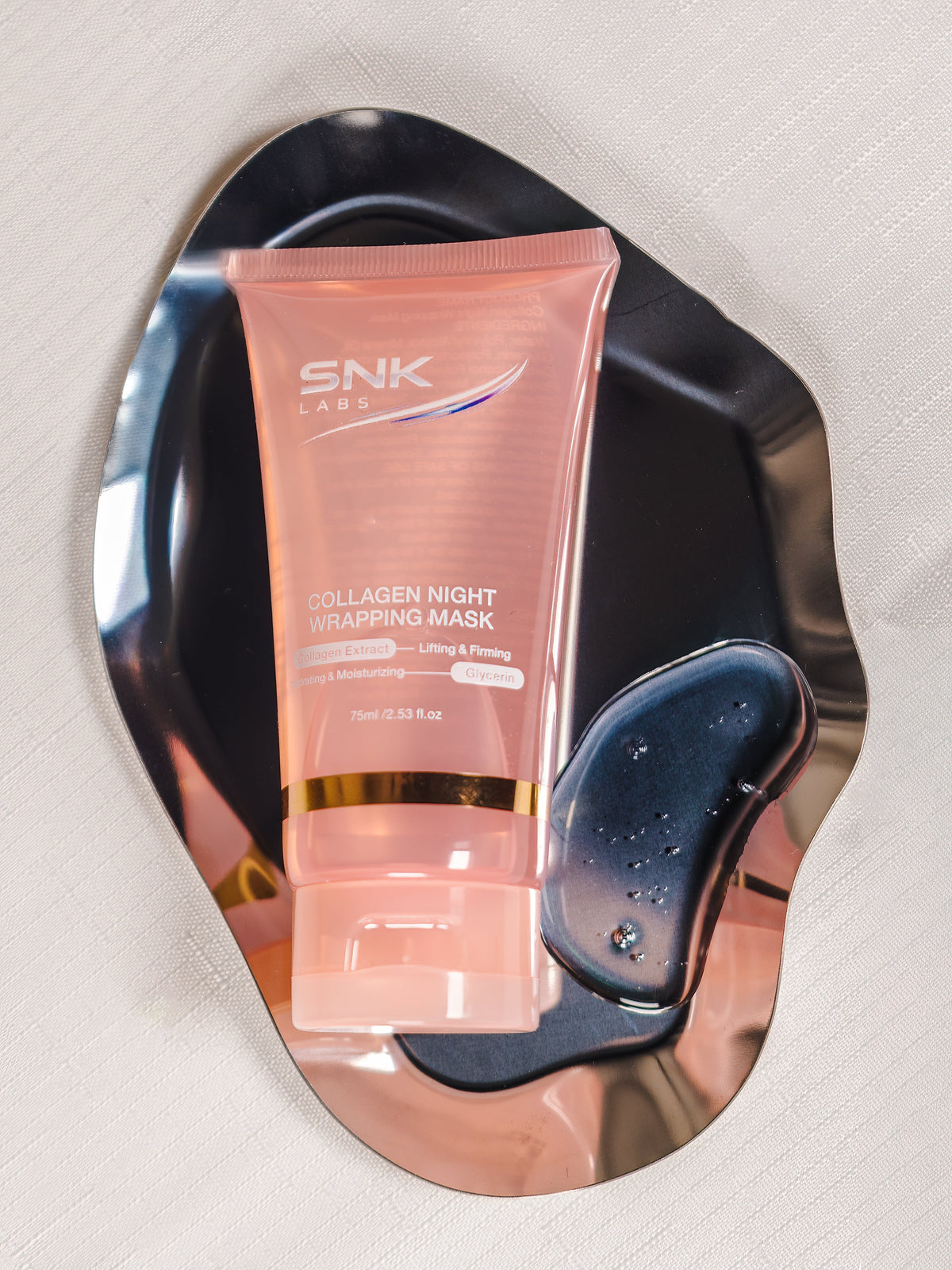
One honest note: our Collagen Night Wrapping Mask doesn't contain ceramides. It supports the barrier a different way, by forming an overnight occlusive film that slows moisture loss while your skin does its own work. Occlusion and lipid replacement are two legitimate routes to the same goal, and it would be easy to blur that. We'd rather say which one we're doing.
Frequently Asked Questions
What does a damaged skin barrier actually feel like?
Tightness after cleansing, stinging from products you previously tolerated, flaking that moisturiser doesn't resolve, and unexplained new sensitivity. If your skin has become unpredictable and hydrating products aren't helping for long, the barrier is the usual explanation.
Are ceramides suitable for oily skin?
Yes. A compromised barrier isn't the same as dry skin, and oily skin can have one — often from over-cleansing or heavy exfoliation aimed at controlling oil. Look for a lightweight formula rather than a rich cream, but there's no reason to avoid ceramides.
Can I use ceramides with retinol or acids?
Yes, and it's often a good pairing. Ceramides don't compete with actives for the same mechanism, and supporting the barrier can make stronger actives more comfortable to use. Apply the lighter product first if you're layering.
How long before I see a difference?
Four to six weeks of consistent use for barrier improvement. You may notice skin feeling less tight sooner than that, but the meaningful change is gradual. If nothing has shifted after two months, the issue may be something other than lipid depletion.
What's the difference between the ceramide types?
They're distinct lipids that occur naturally in skin, each contributing slightly differently to the barrier's structure. NP is the most widely used. Rather than choosing between them, a formula containing several types more closely resembles the mixture your skin actually has.
The Takeaway
Ceramides are the least exciting and most useful ingredient in skincare. They don't transform anything. They replace something your skin is meant to have and has been depleted of, usually by being over-treated.
If your skin feels tight, reactive or unpredictable, ceramides are more likely to help than another hydrating serum, and doing less to your skin generally is more likely to help than either.
For how ceramides fit alongside humectants and actives, see our guide to what hyaluronic acid actually does, or browse our skincare range.
Support the barrier. Do less to it.
Individual results may vary. This product is intended for cosmetic use only.