

Niacinamide Explained: What 3% Actually Means

Niacinamide is a form of vitamin B3 that supports the skin barrier and helps improve the appearance of uneven tone. Most published research uses concentrations between 2% and 5%. higher percentages aren't necessarily better, and can increase the chance of irritation. The number on the front of the bottle is a marketing decision more often than a formulation one.
Niacinamide is one of the few ingredients that genuinely deserves its popularity. It's well studied, well tolerated, and does two useful things at once.
It's also become a numbers contest. You'll find products at 5%, 10%, 12%, even 20%, with the percentage printed larger than the product name, and a widespread assumption that a bigger number means a better product.
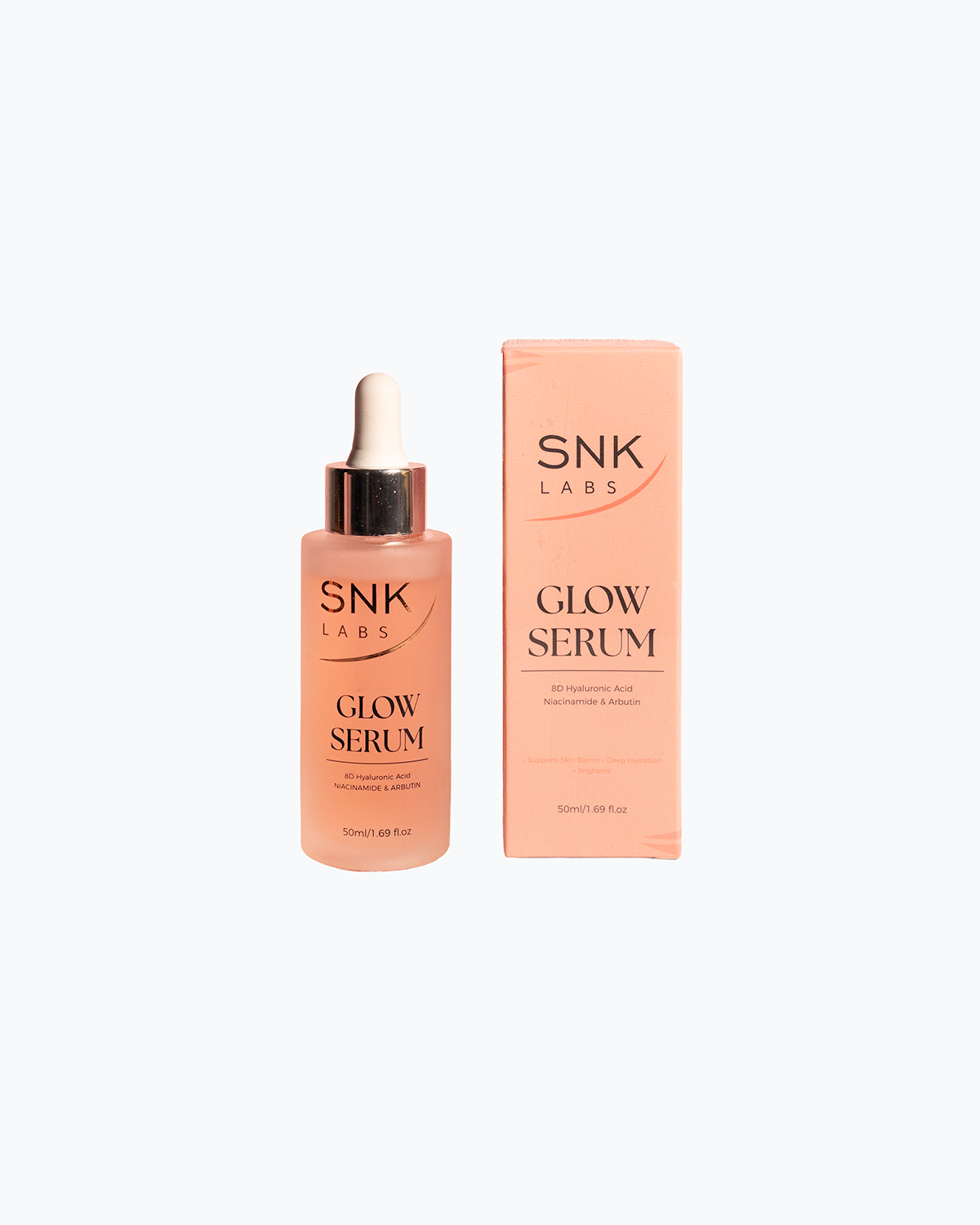
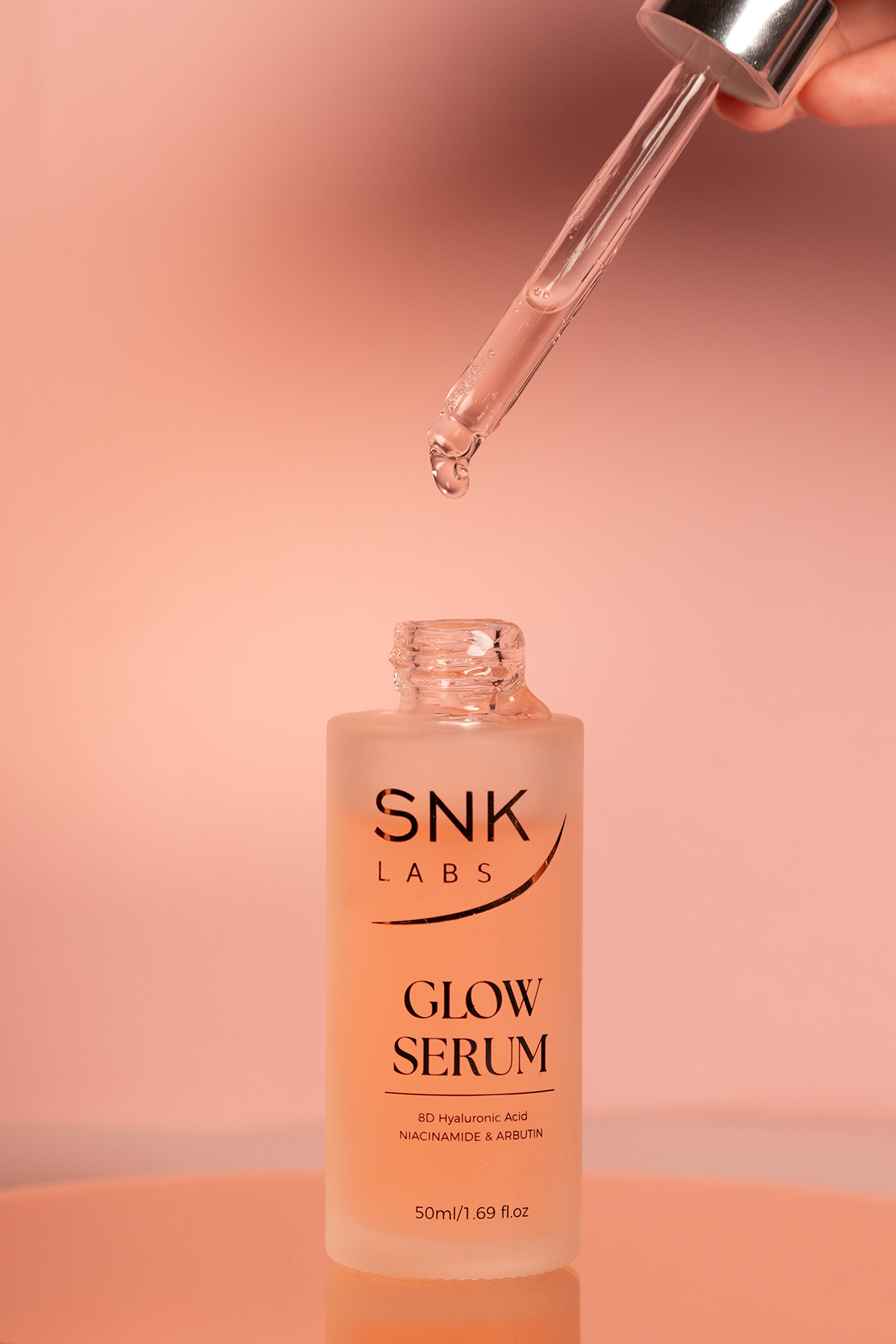
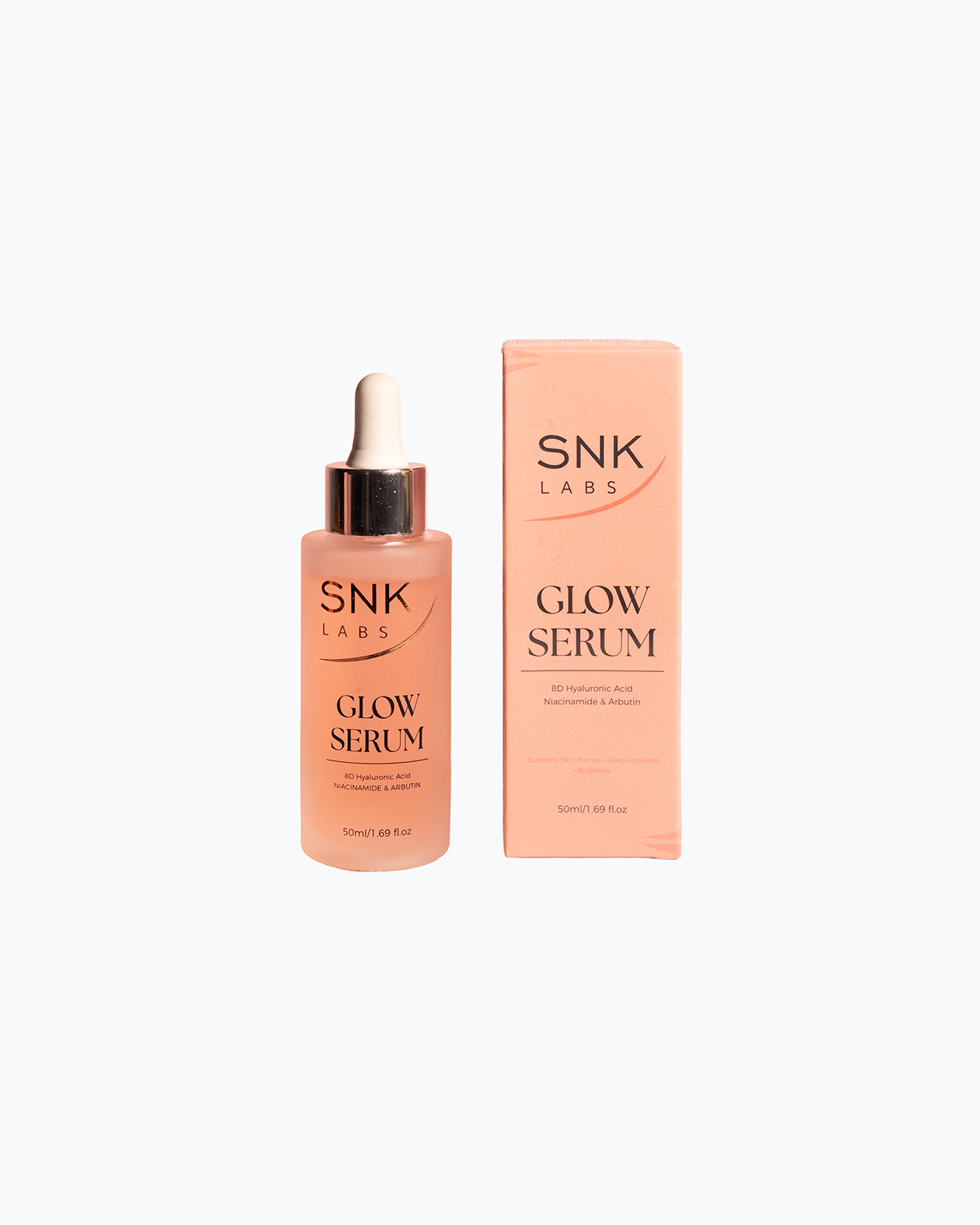
Our Glow Serum contains 3%. Here's why that's a deliberate choice rather than a modest one.
What Niacinamide Does
Two jobs, both worth having.
It supports the skin barrier. Niacinamide is involved in how skin produces its own lipids the ceramides and fatty acids that hold the barrier together. Support that and skin holds water better and reacts less.
It helps improve the appearance of uneven tone. With consistent use, it supports a brighter, more even-looking complexion. Gradually, over months rather than weeks.
It's also unusually easy to live with. No tolerance-building period, no conflicts with other ingredients, suits most skin types. For an ingredient with genuine research behind it, that combination is rare.
The Percentage Question
Here's the part worth understanding, because it runs counter to how these products are sold.
Most published research on niacinamide sits between 2% and 5%. That's the range where the useful effects have been studied and observed. It isn't a budget range or a beginner range — it's the studied range.
Above that, two things happen, and neither is an improvement.
First, diminishing returns. Skin can only use so much of an ingredient. Past a certain concentration you're adding material that has nowhere useful to go.
Second, rising irritation risk. High-percentage niacinamide is a well-known cause of flushing, stinging and sensitivity, particularly for people who already have a compromised barrier. Which is an unfortunate irony, since barrier support is one of the reasons to use it in the first place.
| Concentration | What it means in practice |
|---|---|
| 2–5% | The range most published research uses. Well tolerated by most people |
| 10% | Above the studied range. More likely to irritate, without clear added benefit |
| 12–20% | A marketing number. Meaningfully higher irritation risk |
A higher number tells you there's more of something in the bottle. It doesn't tell you it works better. Whether more is better depends entirely on the ingredient, and for niacinamide the honest answer is usually no.

What Niacinamide Helps With
- Supports the skin's natural barrier — the most consistently supported effect, and the reason it suits sensitive skin
- Supports a brighter-looking complexion with consistent use over time
- Helps improve the appearance of uneven skin tone — gradually, and in appearance rather than structure
- Helps skin feel comfortable, particularly alongside ceramides and calming botanicals
What Niacinamide Won't Do
Direct, because this is where most niacinamide marketing overreaches.
- It won't treat pigmentation or melasma. These are conditions, and they need a GP or dermatologist. A cosmetic can support how skin looks; it can't treat a condition
- It won't treat acne or rosacea. Same reasoning. If you're dealing with either, see a healthcare professional — there are real options and a serum isn't one of them
- It won't fade dark spots. It may help even tone look more uniform over time. That's a different claim, and the difference matters
- It won't work in a fortnight. Barrier effects take four to six weeks; tone takes eight to twelve
Combining Niacinamide With Other Ingredients
It's one of the easiest ingredients to layer, and most of the warnings you'll read are overstated.
With hyaluronic acid — no conflict at all. Different jobs. Our guide to what hyaluronic acid actually does covers the hydration side.
With ceramides — a natural pairing, since both support the barrier from different angles. See why ceramides matter.
With vitamin C — the old advice not to combine them came from studies using unstable conditions that don't reflect modern formulas. Most people use both without issue. If your skin is sensitive, use them at different times of day.
With retinol or acids — generally fine, and niacinamide's barrier support can make stronger actives more comfortable. Introduce one new thing at a time.
How Long Before You'd Notice
- Two to four weeks — skin feeling more comfortable and less reactive
- Four to six weeks — barrier improvements becoming more consistent
- Eight to twelve weeks — the realistic window for any change in how even your skin tone looks, because cell turnover sets the pace
Consistency at 3% beats inconsistency at 10%, by a wide margin. The best concentration is the one you'll use daily without your skin objecting.
Frequently Asked Questions
Is a higher niacinamide percentage better?
Generally no. Most published research sits between 2% and 5%, and above that you get diminishing returns alongside a rising chance of irritation. A higher number tells you there's more in the bottle, not that it works better. Consistency matters considerably more than concentration.
Can I use niacinamide with vitamin C?
Yes. The advice against it traces back to studies using conditions that don't reflect how modern products are formulated. Most people use both without any issue. If your skin is on the sensitive side, using one in the morning and one in the evening is a reasonable precaution.
Does niacinamide help with dark spots?
Not in the sense of removing or fading them, we'd not claim that. With consistent use over a couple of months it may help skin tone look more even overall. If dark spots are a specific concern, a GP or dermatologist can tell you about options that actually treat pigmentation.
Can niacinamide irritate skin?
Yes, particularly at higher concentrations. Flushing, stinging and sensitivity are well documented above the studied range, and people with a compromised barrier are more susceptible. Start lower, introduce it on its own, and stop if your skin reacts.
Should I use it morning or evening?
Either, and both is fine. Niacinamide isn't light-sensitive and doesn't conflict with other steps. Pick whichever you'll actually stick to daily use matters far more than timing.
The Takeaway
Niacinamide is genuinely good, and the percentage race around it is genuinely silly. The research sits at 2–5%. Products at 10% and above are selling a number, and that number carries a real irritation cost.
Our Glow Serum uses 3% niacinamide with 1% alpha-arbutin, inside the studied range and formulated to be used every day rather than cautiously. That's the point of choosing it.
See the full formulation on the Glow Serum page, or read our guide to reading a skincare ingredient list.
Inside the studied range. On purpose.
Individual results may vary. This product is intended for cosmetic use only.